
Swiss cybersecurity startup Soverli has raised US$2.6 million in pre-seed funding to develop a new approach to smartphone security aimed at addressing growing concerns around digital sovereignty, availability and trust in mobile operating systems.
The ETH Zurich spin-off is developing a sovereign operating system layer that can run in parallel with Android or iOS on standard commercial smartphones, without requiring hardware modifications. The company says the approach allows a fully auditable and isolated secure environment to operate alongside a conventional mobile OS, enabling users to retain full smartphone functionality while maintaining a protected, mission-critical workspace.
The funding round was led by Founderful, with participation from the ETH Zurich Foundation, Venture Kick and cybersecurity specialists. Soverli’s technology has been under development for more than four years within ETH Zurich and is based on a patent-pending method that allows multiple operating systems to run simultaneously in strict isolation on a single device.
The concept is designed to address a growing risk faced by governments, emergency services and enterprises: reliance on mobile platforms that cannot be fully audited or controlled. Recent large-scale outages caused by faulty software updates have highlighted how a single failure can disable millions of devices simultaneously, raising concerns about the suitability of mainstream smartphones for mission-critical use.
Soverli’s architecture allows a secure sovereign OS to remain operational even if the primary Android environment is compromised, misconfigured or disabled. Switching between environments can be done instantly, allowing users to move between standard applications and secure communications without rebooting or sacrificing usability.
As a demonstration, Soverli has shown secure messaging applications running entirely inside the isolated sovereign OS, significantly reducing the attack surface and preventing spyware or OS-level compromise from accessing sensitive communications. Because the solution runs on existing smartphones, it can be deployed without custom hardware or specialist devices.
For security, surveillance and public safety buyers, the technology has potential implications across emergency response, law enforcement and critical infrastructure operations, where continuous availability of secure communications is essential. Public sector pilots are already underway with organisations responsible for emergency services and critical infrastructure, where system downtime can have immediate real-world consequences.
Beyond government use, enterprises are exploring the technology for secure bring-your-own-device environments, enabling separation between personal and corporate data without the intrusive controls often associated with mobile device management. The same isolation model could also support journalists, human rights workers and others operating in high-risk environments.
Soverli plans to use the new funding to expand its engineering team, extend compatibility across more smartphone models, integrate with mobile device management platforms and deepen partnerships with device manufacturers. The company’s longer-term goal is to establish a new security standard for smartphones, enabling sovereign-grade protection on consumer hardware without compromising functionality.
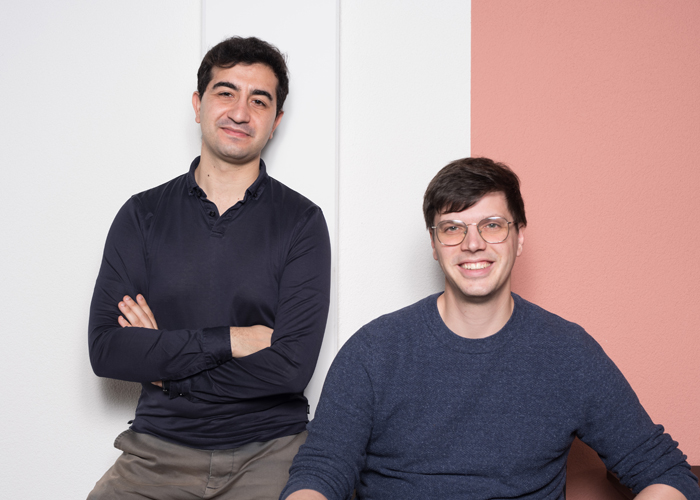
Image: Soverli co-founders Ivan Puddu (CEO, left) and Moritz Schneider (CTO, right) – Photo Credit is Daniel Kunz