

Zeroport has raised US$10 million in seed funding to accelerate the development and global expansion of its non-IP secure remote access technology, positioning the company to challenge long-standing vulnerabilities in traditional VPN-based access models.
The funding round was led by lool ventures, with participation from Clarim Ventures, CyberFuture (backed by Elron Ventures) and Fusion Fund. Zeroport said the capital will be used to expand into North American and Asia-Pacific markets, grow its workforce from 25 to 40 employees over the next year, and further develop its Fantom platform.
Zeroport’s technology is designed to address systemic weaknesses in IP-based remote access systems, which have been repeatedly exploited by cybercriminals. High-profile incidents, including breaches involving VPN infrastructure used by major organisations, have highlighted the risks associated with traditional remote connectivity, particularly in critical infrastructure and government environments.
The company’s Fantom platform uses patented hardware to create a physical, non-IP bridge at the network boundary. Inbound connections are restricted to human interaction signals, while outbound connections are limited to display-only pixel streams. As no IP packets are allowed to enter or leave the protected network, the approach is designed to prevent malware ingress and data exfiltration by design, rather than relying on software controls alone.
Zeroport said this architecture allows organisations to enable secure remote access while maintaining full visibility and control over sessions, reducing reliance on complex legacy access stacks. The company claims the technology has already delivered measurable operational benefits, including eliminating millions of dollars in annual travel costs for customers by enabling secure remote monitoring and maintenance previously considered too risky.
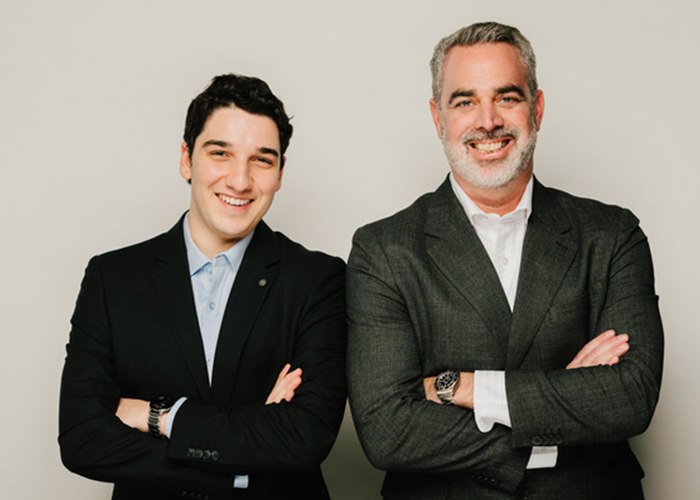
Joseph Gertz (pictured-R), co-founder and chief executive officer of Zeroport, said organisations have long been forced to choose between remaining offline for security reasons or accepting the risks associated with legacy remote access technologies. He said the company’s hardware-based approach enables secure connectivity without compromising critical assets, and that the new funding will support broader adoption globally.
Lool ventures managing partner Yaniv Golan said the firm identified IP-based architecture as the fundamental flaw in existing remote access solutions. He said Zeroport’s early adoption by critical infrastructure operators and validation from large enterprises demonstrate the need for a hardware-based isolation model to support secure digital transformation.
The company has gained additional validation through its participation in Singapore’s CyberBoost Catalyse program and backing from CyberFuture, a venture capital group comprising CISOs from major enterprises, including Siemens Energy. Zeroport holds multiple patents and serves customers across industrial, financial services, defence and industrial control system environments.
The founding team brings together experience in cybersecurity, hardware engineering and enterprise operations, with leadership backgrounds spanning commercial technology and elite military intelligence units. Zeroport said this perspective has shaped its approach to addressing long-standing remote access challenges in high-risk environments.
As cyber resilience becomes an increasingly critical concern amid geopolitical uncertainty and expanding attack surfaces, Zeroport is positioning its non-IP remote access model as a foundational shift in how organisations protect sensitive operational and enterprise networks.