

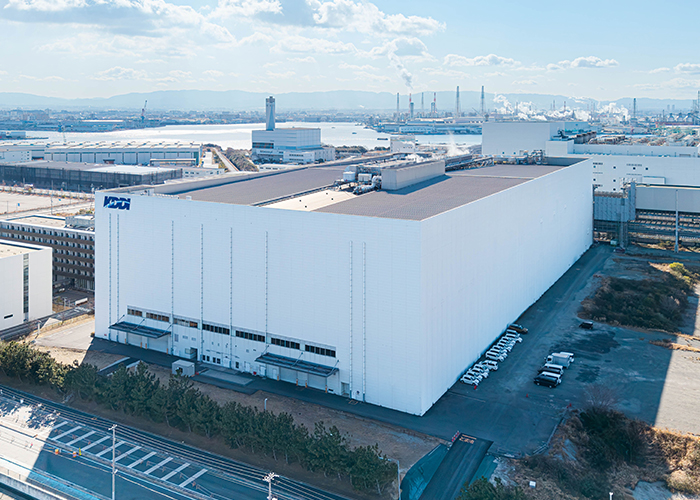
Nokia and Japanese telecommunications operator KDDI have demonstrated quantum-safe optical transport capabilities at KDDI’s new Sakai Data Center, as operators prepare infrastructure for AI-driven workloads and longer-term cryptographic risks.
The trial, conducted at the next-generation facility in Japan, focused on securing high-capacity data flows between distributed data centres using Nokia’s 1830 Photonic Service Switch (PSS) platform with C+L Band technology, alongside its 1830 Security Management Server. The companies say the demonstration validated high-speed optical transport combined with quantum-safe encryption designed to protect sensitive data in transit.
As AI training and inference workloads increasingly require large-scale data movement between facilities, the security of inter-data centre links has become a growing concern. Unlike conventional enterprise traffic, AI workloads often involve massive datasets, proprietary models and sensitive training inputs — including personal and industrial data.
Quantum-safe, or post-quantum, cryptography refers to encryption methods designed to withstand potential future attacks from quantum computers, which could theoretically break widely used public-key algorithms. While large-scale quantum decryption capabilities are not yet operational, infrastructure providers are beginning to incorporate quantum-resistant measures as part of long-term resilience planning.
According to the companies, the optical transport network demonstrated at Sakai is intended to provide high-capacity throughput with built-in cryptographic protections and resilience. The architecture is aimed at safeguarding personal data, critical infrastructure communications and AI workloads moving between distributed facilities.
Japan, like many advanced economies, is accelerating deployment of distributed AI data centres to support industrial automation, smart city applications and cloud-based services. As those facilities scale, optical backbone capacity and encryption standards become central to both performance and compliance.
The demonstration aligns with KDDI’s broader strategy to build AI-ready infrastructure across Japan. By integrating high-bandwidth optical transport with quantum-safe security features, operators aim to reduce the risk of “harvest now, decrypt later” scenarios — in which encrypted data intercepted today could be decrypted in the future using quantum computing advances.
Nokia’s 1830 PSS platform is designed for high-capacity optical transmission across metro and long-haul networks. The addition of quantum-safe capabilities reflects a wider industry trend, as vendors begin embedding post-quantum algorithms into transport, IP and data centre interconnect layers.
While the announcement centres on a demonstration rather than a full-scale commercial rollout, it signals growing recognition that AI infrastructure resilience extends beyond compute capacity. Secure data-in-flight protection is emerging as a critical control point in AI supply chains.
As governments and enterprises increase scrutiny over data sovereignty and critical infrastructure protection, quantum-safe optical transport may shift from a forward-looking feature to a baseline requirement in national data centre architectures.