

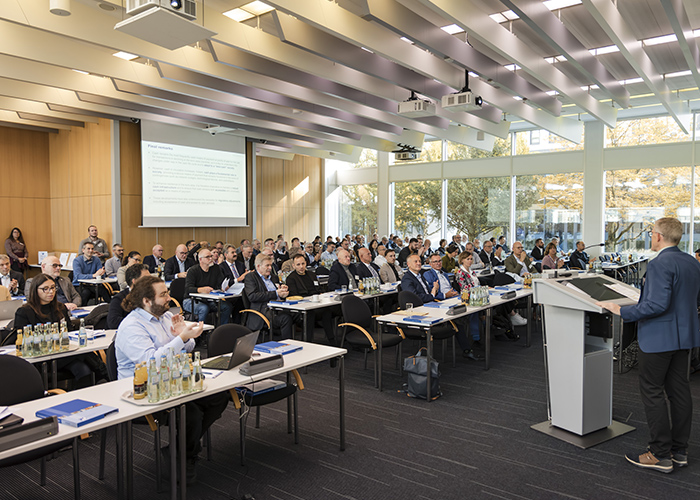
Physical security continues to rise in importance, a trend underscored at the annual general assembly of the European Security Systems Association (ESSA) held in Frankfurt in November. Across two days, 135 international security experts gathered to discuss evolving standards, the implications of the Cyber Resilience Act (CRA), battery fire risks, and the continued relevance of cash in an increasingly digital world. ESSA Managing Director Falko Adomat opened the event, which also featured technical workshops on safe servicing and ISO standards.
A major focus was the ongoing update of ESSA’s core security standards EN 1143-1 and EN 1300. These revisions include new requirements for high-security locks and safes, alongside work to incorporate CRA principles directly into physical security standards. ESSA said these enhancements aim to improve product resilience at a time when physical and digital threats are increasingly intertwined.
ESSA also presented new white papers aimed at informing manufacturers, operators and regulators. One analysis highlights significant disparities across European laws governing weapon storage, a topic drawing growing attention amid security and political debates. Another examines best-practice approaches to constructing secure vault rooms. A forthcoming paper, due in December, will focus on safe lifecycles. According to Adomat, these publications are intended to provide facts, context and actionable guidance across the industry.
The role of cash in an era of rapid digitalisation also drew attention. Olivier Strube from the European Central Bank’s Banknote Directorate stressed that physical currency remains essential for resilience, privacy and inclusive access to payments. He noted that even as digital transactions accelerate, banknotes remain a reliable option during crises. The ECB’s work on a digital euro aims to complement cash rather than replace it, creating a unified European digital payment platform.
The discussions reflected a broad consensus: as threats evolve and regulatory landscapes shift, physical security standards must advance in step, ensuring strong protection across both traditional and emerging risk areas.