
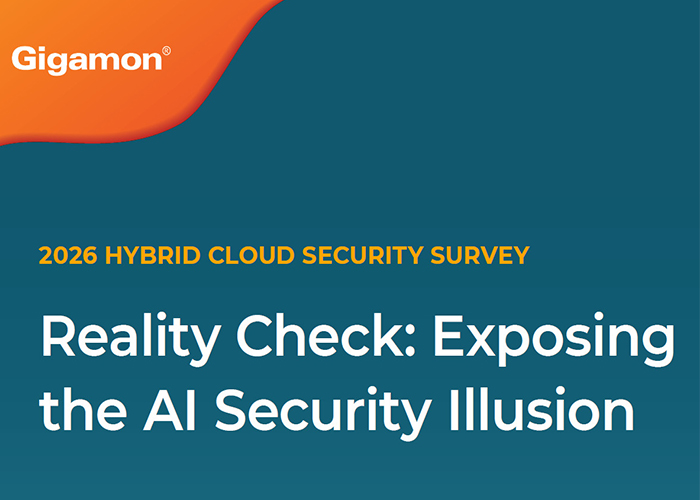
Gigamon’s 2026 Hybrid Cloud Security Survey has found AI was involved in 83% of reported security breaches, as organisations report rising incident rates despite increased investment in security tools.
The survey results show 65% of organisations globally experienced a breach in the past year, while 53% of Australian organisations reported a breach. Gigamon said breach rates rose 18% year-on-year, and that the past three years have seen a 40% increase.
In an Australian snapshot included with the survey, 91% of Australian security leaders said they are recalibrating hybrid cloud risk in response to AI-driven threats, and 86% identified metadata as critical to achieving full visibility across hybrid cloud environments.
The report argues that defenders are being constrained by fragmented visibility across networks and cloud environments, contributing to a gap between confidence in AI security readiness and real-world outcomes. It found nearly two-thirds (64%) of organisations believe their ability to secure new AI technologies is “defined” or “integrated”, despite breach rates remaining high.
The survey also highlights the regulatory context for Australian organisations, pointing to expectations around visibility and resilience under APRA CPS 230 (Operational Risk Management), CPS 234 (Information Security), and critical infrastructure obligations under the SOCI Act.
“AI is embedded in nearly every stage of the attack chain, enabling adversaries to outpace detection and response,” said Shane Buckley, President and CEO at Gigamon. “While 93 percent of organisations are investing in new security tools, many still lack visibility into how data moves across their environments, creating confidence without control. Closing this gap requires deep observability, giving security teams the clarity needed to detect threats earlier and respond with precision.”

According to the report, AI is increasingly embedded across security operations, with 94% of respondents reporting it autonomously initiates security functions without human interaction, most commonly in alert triage and prioritisation (53%). It also lists several AI-related incident categories: external AI attacks (41%), internal leaks (30%), unsanctioned use of AI (30%), and direct attacks on large language model systems (33%).
In Australia, the report says AI-driven threats are contributing to a 17% year-on-year rise in breach activity locally.
The survey also reports shifting views on where AI workloads should run. It found 70% of leaders are reluctant to deploy AI in public cloud environments, up from 54% the previous year, while 72% believe data lakes are more secure for AI workloads.
Looking further ahead, 87% of respondents said they fear “harvest now, decrypt later” attacks associated with quantum computing, which could put currently encrypted data at future risk.
The report identifies visibility as a primary security priority for defending against AI-driven threats. Among organisations that experienced a breach, only 30% said they had the tools needed to respond effectively, according to the findings.
The study, now in its fourth year, surveyed more than 1,000 security and IT leaders across Australia, France, Germany, Singapore, the UK, and the US. Gigamon said the 2026 survey was commissioned by the company and fielded in collaboration with Vitreous World, based on an online survey of 1,023 global respondents conducted February 16–17, 2026.
You can read the full report here.